3 Days in Hanoi Itinerary for First-Time Visitors

Hanoi is one of those cities that feels overwhelming at first, but strangely calming once you settle into its rhythm. Between the constant stream of scooters, crowded Old Quarter streets and endless food options, it can initially feel a little chaotic for first-time visitors. But after spending a few days there, I realised that Hanoi is actually best experienced slowly.
If you are planning 3 days in Hanoi, I honestly think it is enough time to enjoy the city without rushing too much. While you will not be able to see everything, 3 days gives you enough time to experience Hanoi’s café culture, local food scene, historic attractions and slower moments around Hoan Kiem Lake and the Old Quarter.
This 3 days in Hanoi itinerary is written from the perspective of a first-time visitor travelling at a realistic pace, especially for travellers flying in from Singapore or elsewhere in Southeast Asia for a short trip. Instead of trying to cram every attraction into a packed schedule, this guide focuses on what Hanoi actually feels like to explore over three days — including where to stay, what to eat, how to move around the city and which places are genuinely worth your time.
Whether you are visiting Hanoi for the first time or simply trying to plan a shorter Vietnam trip, here is how I would personally spend 3 days in Hanoi.
In This Guide
Is 3 Days in Hanoi Enough?
Personally, I think 3 days in Hanoi is the minimum most travellers should aim for, especially if you are flying in from Singapore. While the flight itself is only around 3.5 hours, once you factor in airport transfers, immigration and the return journey home, a “3-day trip” can realistically feel closer to 2.5 days on the ground.
Because of that, time in Hanoi can pass surprisingly quickly. It is still possible to enjoy the city properly within 3 days, but I would strongly recommend planning your itinerary carefully instead of trying to squeeze in too many attractions.
For first-time visitors, I think staying around the Old Quarter makes the most sense. It is where many travellers naturally spend most of their time anyway, with plenty of local food, cafés, shopping and sightseeing all within walking distance of each other.
You can still venture outside the Old Quarter, of course, especially towards areas like West Lake or Train Street, but doing so will naturally take up more time. Personally, I found Hanoi much more enjoyable when I allowed some space in the itinerary to slow down — whether that meant sitting at a café for an hour longer than planned or simply walking around Hoan Kiem Lake without rushing to the next attraction.
If you are still deciding between 3, 4 or 5 days, I also wrote a more detailed guide on how many days in Hanoi is enough for first-time visitors.

Day 1: Explore Hanoi’s Old Quarter and Hoan Kiem Lake
Most flights from Singapore arrive in Hanoi either around midday or later in the afternoon, so I would personally avoid overplanning the first day. Between immigration, the drive from Noi Bai International Airport into the city and hotel check-in, you may already feel slightly tired by the time you properly settle into Hanoi. Personally, I think the best introduction to Hanoi is simply to slow down, settle into the Old Quarter and allow yourself to absorb the atmosphere of the city first.
For first-time visitors, I think staying somewhere around the Old Quarter makes the most sense. Not only is it one of the most atmospheric parts of Hanoi, but many of the city’s cafés, food spots and sightseeing areas are also concentrated within walking distance of each other.
After checking into your hotel, I would recommend starting the trip slowly with lunch somewhere within the Old Quarter itself. Honestly, one of the best parts about Hanoi is that you do not always need a strict food plan. Some of my favourite meals in Hanoi were simply from walking into random local eateries that happened to be crowded with locals. Whether it is a bowl of phở, bún chả or a simple Vietnamese iced coffee by the roadside, the Old Quarter is probably one of the easiest places in Hanoi to simply walk and eat.
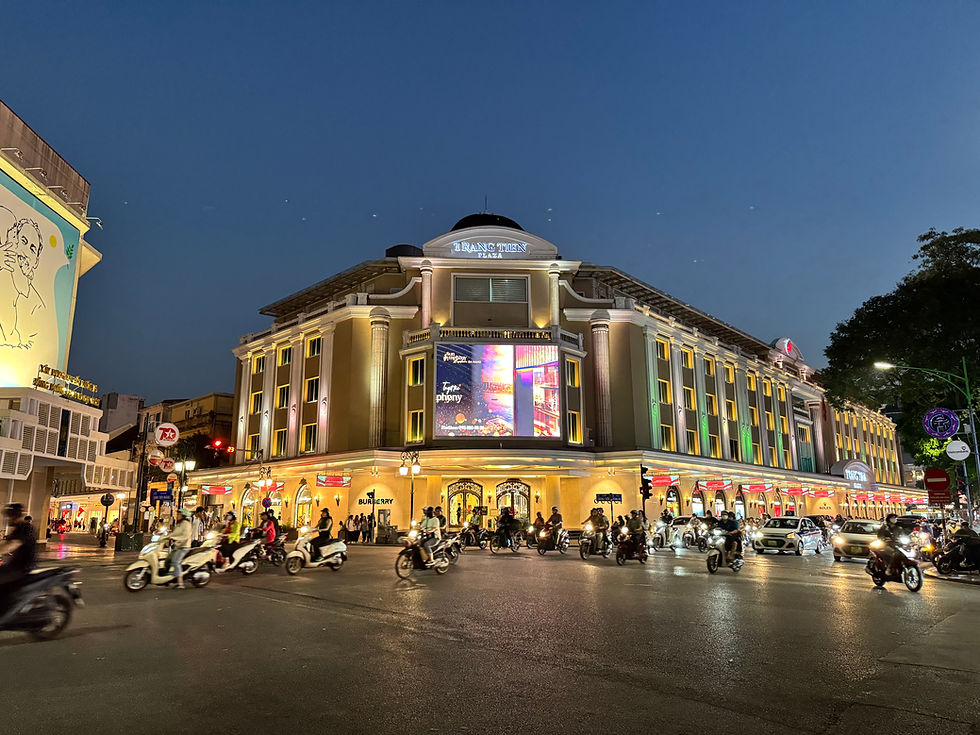
From there, spend some time simply exploring the streets around the Old Quarter without rushing too much. Places like Hoan Kiem Lake, Ngoc Son Temple and St. Joseph’s Cathedral are all relatively close to each other and can easily fill up an afternoon at a slower pace. If time allows, you can also do a little shopping around the Hoan Kiem area itself. The large UNIQLO Hoan Kiem outlet near the lake has become a surprisingly popular stop for many visitors, especially if you need a short air-conditioned break from the heat or simply want to browse casually before continuing the day.

Personally, I think Hanoi is one of those cities that is best experienced on foot, especially around the Old Quarter, where much of the atmosphere comes from the movement of the streets themselves.
By late afternoon, I would highly recommend slowing down at one of Hanoi’s many cafés. Hanoi’s café culture is honestly one of my favourite parts of the city, and I think first-time visitors should intentionally leave some time in their itinerary to sit down and enjoy the slower pace. Places like Tranquil Books & Coffee offer a much quieter, slower atmosphere than the busy streets outside, and it is also located relatively close to Hanoi Train Street, making it a convenient stop before heading there later in the evening. I think this is usually the moment where Hanoi starts to feel less overwhelming and more enjoyable.

Before heading towards Train Street, you can also consider stopping for an early dinner nearby. Places like Phở Khôi Hói are popular amongst both locals and travellers, and personally, I think having a simple bowl of phở in Hanoi somehow feels more memorable when enjoyed casually in between walking around the city rather than as part of a tightly planned food itinerary.
As night approaches, head over towards Hanoi Train Street for dinner or drinks. While Train Street has become one of Hanoi’s more touristy attractions in recent years, I still think it is worth experiencing at least once, especially at night when the atmosphere becomes much livelier. Sitting just inches away from the tracks while the train slowly passes through the narrow street is honestly quite surreal the first time you experience it.

After Train Street, you can either head back towards the Old Quarter for supper and dessert, or simply end the night with another relaxed walk around Hoan Kiem Lake. Hanoi tends to feel very different at night compared to the daytime — slightly calmer, cooler and somehow even more atmospheric once the crowds start thinning out.
Suggested Stops for Day 1
Tranquil Books & Coffee — Quiet café near Train Street known for its slower atmosphere and bookshelves.
Phở Khôi Hói — Popular local phở spot located close to Train Street.
UNIQLO Hoan Kiem — Convenient shopping stop near Hoan Kiem Lake.
Hanoi Train Street — One of Hanoi’s most famous night attractions.
Day 2: Cafés, Culture and a Slower Side of Hanoi
After spending the first day exploring the Old Quarter and Hoan Kiem Lake, Day 2 is the perfect opportunity to experience a slightly different side of Hanoi. While I still think the Old Quarter is the best base for first-time visitors, this is probably the day to venture a little further beyond the immediate area and explore some of Hanoi’s cultural and quieter neighbourhoods at a slower pace.
Start the morning slowly with breakfast and coffee before heading out for the day. Hanoi’s café culture is one of the most underrated parts of visiting the city. Some of my favourite cafés in Hanoi were honestly the smaller and quieter ones tucked above old buildings or hidden inside narrow alleyways, where you can simply sit for an hour watching the streets below.
If you are visiting Hanoi for the first time, I also think trying Hanoi’s famous egg coffee at least once is worth the experience. Places like Cafe Giảng have become well known amongst both locals and travellers for good reason, and while it is undeniably more touristy nowadays, it remains one of the more memorable café experiences in Hanoi.

For first-time visitors, I think the Temple of Literature is worth visiting at least once. As Vietnam’s first national university, it offers a noticeably calmer atmosphere compared to the busy streets around the Old Quarter. The courtyards, traditional architecture and slower pace here feel very different from the rest of the city, making it a nice contrast after the energy of Day 1.
From there, you can either continue towards the nearby Ho Chi Minh Mausoleum area or simply spend more time relaxing at another café nearby instead of rushing through too many attractions. Personally, I think Hanoi becomes much more enjoyable once you stop trying to “cover” everything and allow some flexibility in the itinerary itself.
Around lunchtime, I would recommend slowing down again with another proper local meal instead of rushing between attractions. Places like Bún riêu sườn sụn Trang are popular for good reason, especially if you want to try something beyond the more commonly mentioned phở or bánh mì. I feel that meals like bún riêu feel especially comforting after a long morning of walking around Hanoi.

One thing I quickly realised in Hanoi is that meals often become part of the experience rather than just something squeezed between sightseeing spots. Sometimes, the most memorable parts of the day are simply sitting along the roadside with Vietnamese coffee while watching the city move around you.
By late afternoon, I would recommend heading towards the West Lake area for a slower evening. Compared to the dense streets around Hoan Kiem Lake and the Old Quarter, West Lake feels much quieter, more spacious and slightly more residential. There are plenty of cafés and restaurants overlooking the water, and the atmosphere around sunset feels noticeably calmer compared to central Hanoi.
If time allows, you can also stop by the nearby Tran Quoc Pagoda, which sits along the edge of West Lake and is one of the oldest pagodas in Vietnam. Personally, I found this part of Hanoi especially relaxing towards the evening, when the weather cools down, and the pace around the lake slows even further.
For dinner, you can either remain around West Lake for a quieter evening or head back towards the Old Quarter for more street food, shopping and cafés before ending the night. Even after multiple visits, I still think Hanoi is one of those cities that feels best when explored slowly rather than rushed through attraction by attraction.
Suggested Stops for Day 2
Temple of Literature — Vietnam’s first national university and one of the calmer cultural attractions in Hanoi.
Ho Chi Minh Mausoleum — Large historical complex with open squares and tree-lined surroundings that feel very different from the Old Quarter.
Cafe Giảng — One of Hanoi’s most famous cafés and a popular place to try traditional egg coffee.
Bún riêu sườn sụn Trang — Popular local eatery known for its comforting bowls of bún riêu.
West Lake — Quieter and more spacious part of Hanoi known for its cafés, restaurants and slower atmosphere.
Tran Quoc Pagoda — A historic pagoda located along the edge of West Lake, especially pleasant around sunset.
Day 3: Markets, Food and One Last Walk Around Hanoi
By Day 3, I think most travellers would already feel much more comfortable navigating Hanoi compared to when they first arrived. The streets that initially felt slightly chaotic somehow begin to feel more familiar, and this is probably the best time to simply enjoy the city at a slower pace without trying to squeeze in too many major attractions.
Personally, I would keep the final day in Hanoi relatively flexible. Depending on your flight timing, this can either be a slower half-day before heading to the airport or another full day to revisit parts of the city you particularly enjoyed earlier in the trip.
Start the morning with another relaxed breakfast and coffee in the Old Quarter or around Hoan Kiem Lake. By this point, you will probably already have a few favourite cafés or streets that you naturally find yourself returning to. Honestly, I think that is part of Hanoi’s charm — the city slowly becomes more enjoyable once you stop treating every hour as sightseeing time.
If you still want to do some shopping before leaving Hanoi, this is probably the best day to do so. Areas around Hoan Kiem Lake and the Old Quarter are filled with small shops, local boutiques and souvenir stores selling everything from snacks and coffee to clothing and travel keepsakes. If you prefer something more modern and air-conditioned, you can also stop by UNIQLO Hoan Kiem again before leaving the city.
If you are looking for last-minute souvenirs before flying home, I think the Old Quarter is honestly one of the easiest places to shop casually without needing a strict plan. Many of the small streets around Hoan Kiem Lake are filled with souvenir stores, local snacks, Vietnamese coffee, tote bags and smaller gifts that are easy to bring home without taking up too much luggage space.
Personally, I found Hanoi quite enjoyable for slower and more casual shopping compared to some larger cities in the region. Rather than huge shopping malls, much of the experience comes from simply wandering through smaller streets and occasionally stepping into shops that catch your attention along the way.
For travellers interested in exploring a more traditional local market atmosphere, you can also consider visiting Dong Xuan Market. While I do not think it is absolutely necessary for a shorter Hanoi trip, it can still be an interesting place to walk around if you enjoy browsing local stalls and experiencing a slightly busier side of the city beyond the usual cafés and sightseeing areas.
Around lunchtime, I would recommend keeping things simple and enjoying one final local meal before leaving Hanoi. Places like Bún Cá Sâm Cây Si are worth considering if you want to try something slightly different from the usual phở or bún chả often recommended to first-time visitors. Personally, I think some of the most memorable meals in Hanoi are often the simpler and more casual ones rather than the heavily planned “must-visit” spots.
Some of my favourite moments in Hanoi were honestly the quieter ones — sitting at a roadside eatery, drinking Vietnamese coffee slowly or simply watching scooters pass by from a small café window.
If your flight is later in the evening, you can also spend some final time walking around Hoan Kiem Lake one last time before heading back to the airport. Compared to many larger cities in the region, I think Hanoi leaves a much stronger impression through its atmosphere rather than through major attractions alone.
Personally, I do not think 3 days in Hanoi is enough to see absolutely everything. But for first-time visitors, I think it is enough time to experience what makes the city memorable — the café culture, slower pace, food, atmosphere and constant energy that somehow feels both chaotic and calming at the same time.
Suggested Stops for Day 3
Hoan Kiem Lake — Ideal for one final relaxed walk before leaving Hanoi.
Dong Xuan Market — A traditional local market that can be worth exploring if you enjoy browsing busier local shopping areas.
UNIQLO Hoan Kiem — Convenient stop for casual shopping or a quick air-conditioned break near the Old Quarter.
Bún Cá Sâm Cây Si — Popular local eatery known for its comforting bowls of bún cá.
Old Quarter — Best explored slowly on the final day, especially for cafés, smaller shops and picking up last-minute souvenirs before heading to the airport.
Where to Stay in Hanoi for 3 Days
Personally, I think where you stay in Hanoi can make a surprisingly big difference on a shorter trip. While Hanoi is not an overly large city, traffic can still slow things down quite a bit, especially during peak periods. For a 3-day itinerary, I would generally recommend staying somewhere that minimises unnecessary travelling and allows you to explore more comfortably on foot.
Old Quarter — Best for First-Time Visitors
For most first-time visitors, I honestly think staying around the Old Quarter or Hoan Kiem Lake area makes the most sense. Many of Hanoi’s cafés, food spots, sightseeing areas and walking streets are concentrated around this part of the city, which makes it especially convenient for shorter stays.
I also think that this part of Hanoi gives the strongest “Hanoi atmosphere”, especially during the evenings when the streets become much livelier. Staying nearby also makes it easier to return to your hotel for short breaks throughout the day without constantly relying on Grab rides across the city.
West Lake — Better for Slower and Quieter Trips
If you prefer somewhere quieter and slightly more relaxed, the West Lake area can also be a very good option. Compared to the Old Quarter, this part of Hanoi feels noticeably calmer, more spacious and slightly more residential.
There are also plenty of cafés, lakeside restaurants and quieter walking areas around West Lake, which can make the experience feel slower paced overall. That said, for a first-time 3-day trip, I would still personally lean towards staying somewhere more central simply because of the convenience and atmosphere.

Hotels I Personally Stayed At in Hanoi
Over multiple trips to Hanoi, I have personally stayed in several different parts of the city, and honestly, each hotel ended up offering a very different experience depending on the pace and style of the trip.
Some hotels I personally stayed at in Hanoi include:
Sofitel Legend Metropole Hanoi — Probably one of the most iconic luxury hotels in Hanoi, especially if you enjoy heritage-style properties and a more historic atmosphere close to Hoan Kiem Lake.
Hotel de l'Opera Hanoi - MGallery — A centrally located boutique-style hotel near the Hanoi Opera House that feels especially convenient for travellers who want to stay close to Hoan Kiem Lake while still enjoying a slightly quieter atmosphere compared to the busier streets deeper inside the Old Quarter.
Pan Pacific Hanoi — Located closer towards West Lake and Truc Bach Lake, which makes it feel noticeably quieter compared to staying directly inside the Old Quarter while still remaining relatively convenient.
Dusit Le Palais Tu Hoa Hanoi — A newer luxury hotel located around the West Lake area that feels calmer and slightly more residential, especially suited for travellers who prefer slower mornings and quieter surroundings.
InterContinental Hanoi Landmark72 — A much more modern business-style hotel located further away from the main tourist areas, but excellent if you prefer larger rooms, skyline views and a quieter stay away from the crowds of central Hanoi.
Personally, I think the “best” place to stay in Hanoi really depends on the type of trip you want. For shorter first-time visits, I would still lean towards staying somewhere more central around the Old Quarter or Hoan Kiem Lake. But for slower repeat trips to Hanoi, I can honestly see the appeal of quieter areas like West Lake as well.
How Much Does 3 Days in Hanoi Cost?
Personally, I think Hanoi is one of the more affordable cities in the region for a short getaway, especially compared to destinations like Singapore, Seoul or Tokyo. Depending on your travel style, a 3-day trip to Hanoi can realistically range anywhere from a relatively budget-friendly weekend getaway to a much more luxurious city break.
Flights from Singapore to Hanoi
For travellers flying from Singapore, flights will probably be one of the largest expenses of the trip. Budget airlines occasionally offer cheaper fares below S$200 during promotional periods, although I think somewhere around S$300–500 for return flights is probably a more realistic expectation for most travellers, depending on season, airline and baggage requirements.
I do feel that flight timings matter quite a bit for shorter Hanoi trips. Cheaper flights are not always the best value if they significantly reduce the actual time you spend in the city itself.
Hotels in Hanoi
Accommodation costs in Hanoi can vary quite a bit depending on the type of stay you prefer. Personally, I found Hanoi to offer relatively strong value when it comes to hotels, especially compared to many other major cities in Asia.
Mid-range hotels in Hanoi can still feel surprisingly affordable, while internationally branded luxury hotels are often cheaper compared to equivalent properties in Singapore. Depending on location and season, I think many comfortable internationally branded hotels in Hanoi can realistically range somewhere around S$150–300 per night, although luxury properties can naturally cost much more during peak travel periods.
Food, Coffee and Daily Spending
Food and coffee are honestly where Hanoi feels especially affordable. Local meals, Vietnamese coffee and casual cafés are generally very reasonably priced, and personally, I think part of the enjoyment comes from being able to slow down and explore different cafés or roadside eateries throughout the trip without constantly thinking too much about cost.
Many casual local meals can still cost well below S$10, while Vietnamese coffee and café hopping around the Old Quarter often feel surprisingly affordable compared to Singapore. Personally, I think Hanoi is one of those cities where some of the best experiences are often the simpler ones rather than the expensive ones.
Getting Around Hanoi
Transport around Hanoi is also relatively manageable for shorter trips. Grab is widely used across the city, and for most first-time visitors, I think relying on Grab occasionally while exploring mainly on foot is probably the easiest combination overall.
Most attractions around the Old Quarter and Hoan Kiem Lake are also relatively close to each other, which is one of the reasons why I personally recommend staying somewhere central for shorter stays in Hanoi.
Overall, I think Hanoi offers very good value for a shorter trip, especially if you enjoy slower travel, café culture and food-focused experiences rather than heavily attraction-driven itineraries. Personally, I never felt that Hanoi required excessive spending to enjoy the city properly, which is honestly part of its appeal for repeat visits as well.

Hanoi Travel Tips for First-Time Visitors
Do Not Overplan Your Days
I think Hanoi is one of those cities that becomes more enjoyable once you stop trying to rush between attractions. While it can be tempting to squeeze multiple sightseeing spots into a short itinerary, I honestly think some of the best moments in Hanoi come from simply slowing down at a café or wandering through the Old Quarter without a strict plan.
Grab Makes Getting Around Hanoi Much Easier
For most first-time visitors, Grab is probably the easiest way to move around Hanoi when needed. While many areas around the Old Quarter are walkable, Hanoi’s traffic can still feel slightly overwhelming initially, especially if you are unfamiliar with crossing larger roads or navigating smaller streets.
Hanoi Traffic Can Feel Overwhelming Initially
One thing that surprises many first-time visitors is just how busy Hanoi’s traffic can feel, especially around the Old Quarter. The city starts becoming much less intimidating once you realise that much of Hanoi’s movement feels more fluid than structured. Crossing roads can still feel stressful initially, but after a day or two, most travellers naturally become more comfortable with the pace of the city.
Leave Time for Cafés
Honestly, I think Hanoi’s café culture is one of the highlights of visiting the city. Rather than treating cafés as short coffee stops between attractions, I would actually recommend intentionally setting aside time to slow down and enjoy them properly. Some of my favourite moments in Hanoi were simply sitting inside small cafés watching the streets outside.
Stay Somewhere Central for Shorter Trips
For shorter first-time trips, I would still recommend staying somewhere around the Old Quarter or Hoan Kiem Lake where possible. Not only does it reduce unnecessary travelling time, but it also allows you to experience much more of Hanoi on foot, which I honestly think is the best way to experience the city itself.
Hanoi Feels Very Different From Ho Chi Minh City
If you have already visited Ho Chi Minh City before, I think Hanoi may initially feel noticeably slower, older and slightly more chaotic. Personally, I found both cities enjoyable for very different reasons, although Hanoi’s atmosphere and café culture probably left the stronger impression on me over time.
If you are deciding between both cities for a shorter Vietnam trip, I also wrote a more detailed comparison between Hanoi and Ho Chi Minh City based on my own experience visiting both.
Frequently Asked Questions About Visiting Hanoi
Q1: Is 3 days enough for Hanoi?
A1: Personally, yes — I think 3 days is enough for first-time visitors who want to experience Hanoi at a slower and more realistic pace. While you obviously will not see every attraction in the city, 3 days is usually enough time to explore the Old Quarter, Hoan Kiem Lake, West Lake and several of Hanoi’s cultural sights without rushing excessively.
Q2: Which area is best to stay in Hanoi for first-time visitors?
A2: For most first-time visitors, I would recommend staying somewhere around the Old Quarter or Hoan Kiem Lake area. Many of Hanoi’s cafés, food spots and sightseeing areas are concentrated around this part of the city, which makes it much easier to explore Hanoi comfortably on foot during a shorter trip.
Q3: Is Hanoi walkable for tourists?
A3: Parts of Hanoi are surprisingly walkable, especially around the Old Quarter and Hoan Kiem Lake. That said, traffic can initially feel overwhelming for first-time visitors, particularly when crossing larger roads. Personally, I think Hanoi becomes much easier to navigate once you slowly adjust to the pace and rhythm of the city itself.
Q4: Is Hanoi expensive for travellers from Singapore?
A4: I found Hanoi relatively affordable compared to Singapore, especially when it comes to food, coffee and transportation. Local meals, Vietnamese coffee and Grab rides are generally very reasonably priced, while hotels in Hanoi can also offer surprisingly good value compared to many other major cities in Asia.
Q5: Should I stay in Old Quarter or West Lake?
A5: I think it really depends on the type of trip you want. For first-time visitors on a shorter itinerary, I would still personally lean towards the Old Quarter for its convenience, atmosphere and walkability. West Lake, on the other hand, feels quieter, slower and slightly more residential, which may appeal more to repeat visitors or travellers looking for a calmer stay.
Q6: Is Hanoi safe for first-time visitors?
A6: I generally found Hanoi quite safe for tourists, including around the Old Quarter and Hoan Kiem Lake areas, where many first-time visitors tend to stay. The main challenge for most travellers is honestly the traffic rather than safety itself, especially when crossing roads for the first time. As with most major cities, I would still recommend staying aware of your belongings in crowded areas and tourist hotspots.
Q7: When is the best time to visit Hanoi?
A7: I think Hanoi becomes especially enjoyable during the cooler months towards the end of the year when the weather feels much more comfortable for walking around the city. That said, the “best” time really depends on the type of experience you prefer, as Hanoi’s atmosphere can feel quite different across different seasons. I also wrote a more detailed guide comparing the best time to visit Hanoi and Ho Chi Minh City based on weather and overall travel experience.
Q8: Is Hanoi or Ho Chi Minh City better for a short trip?
A8: I think both cities are enjoyable for very different reasons. Ho Chi Minh City generally feels faster paced, more modern and slightly easier to navigate initially, while Hanoi feels older, more atmospheric and much more centred around cafés, slower exploration and local street culture. I also wrote a more detailed comparison between Hanoi and Ho Chi Minh City based on my own experience visiting both cities.

Final Verdict: Is 3 Days in Hanoi Worth It?
Personally, yes — I do think 3 days in Hanoi is worth it, especially for first-time visitors looking for a shorter getaway from Singapore or elsewhere within Southeast Asia.
While 3 days is obviously not enough to experience every part of Hanoi in depth, I honestly think it is enough time to understand what makes the city memorable. Compared to some cities where sightseeing attractions dominate the experience, Hanoi leaves a much stronger impression through its atmosphere, food culture, cafés and slower rhythm of daily life.
What stayed with me most after visiting Hanoi was not necessarily any single attraction. Instead, it was smaller moments like sitting inside a quiet café while scooters moved endlessly outside, slowly walking around Hoan Kiem Lake in the evening, or simply wandering through the Old Quarter without any particular destination in mind.
At the same time, I do not think Hanoi is a city that everyone will instantly fall in love with. The traffic can feel chaotic, the streets can feel overwhelming initially, and the pace of the city can sometimes feel exhausting, especially for first-time visitors. But strangely, I think that is also part of Hanoi’s charm. Hanoi slowly becomes more enjoyable once you stop trying to rush through it.
I think Hanoi is best suited for travellers who enjoy slower travel, café culture, local food, and simply experiencing the atmosphere of a city itself, rather than constantly moving between major attractions. For those types of travellers, 3 days in Hanoi can honestly feel surprisingly fulfilling despite how short the trip may initially sound.
If you are still deciding whether Hanoi suits your travel style, I also shared a more detailed breakdown in my full Hanoi verdict guide.
Please note that this article may contain links to websites, where any subsequent purchases made may provide straitstravellers with a referral commission. This in turn helps support the running of this website. We appreciate your support thus far. Thank you!


Comments